-
Kateryna Aliinyk
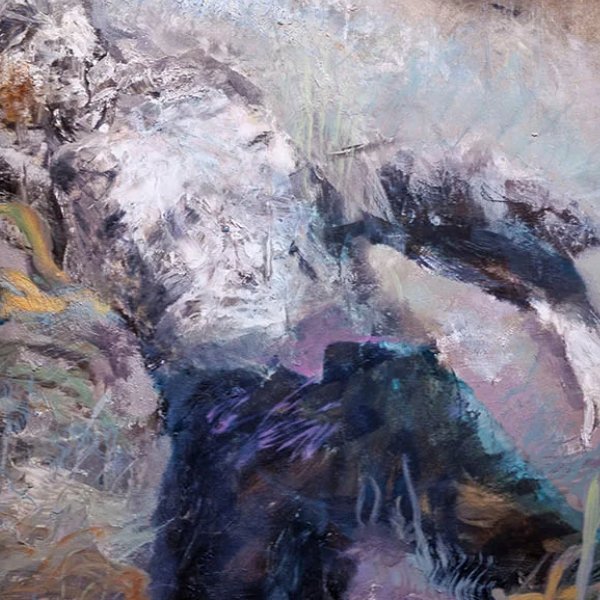 Maturity is beautiful but no more than innocence oil on canvas, 2025 Kateryna Aliinyk’s project emerges as a feminist intervention into an existing work by Waldemar Tatarczuk. By creating her own painting over the work of an established artist and curator, Aliinyk does not displace the original image; instead, she complements it, preserving its initial style. She destabilizes the role of the artist — the master, the more experienced and renowned figure — while striving not to erase most of the original. The work thus becomes a ground for discussing authorship, the role of the artist, the curator as a key figure, masculinity, power, and authority in the art field. What constitutes an artwork, and what is its original form? Tatarczuk’s work becomes material from which a new artistic language is built here and now. By giving his work to Aliinyk, Tatarczuk rethinks his own role as an artist, posing an open question about what exactly an artist is capable of giving, transmitting, or offering to others.
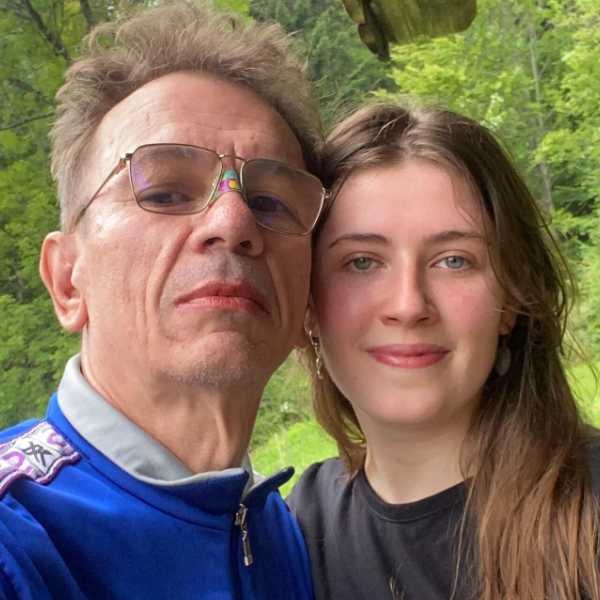 Kateryna Aliinyk born 1998, Luhansk, Ukraine. Since 2016, she has lived and worked in Kyiv. She graduated from the National Academy of Fine Arts with a master’s degree (2021). She also studied contemporary art at the Kyiv Academy of Media Arts (2020) and ‘Positions of Artists’ within the experimental self-educational project The Method Fund (2020). Her works have been presented at numerous exhibitions including ‘From Ukraine: Dare to Dream’, part of the official programme accompanying the 60th Venice Biennale (2024); ‘Our Years, Our Words, Our Losses, Our Searches, Our Us’ (Jam Factory Art Center, Lviv, 2023); Kyiv Biennial (2023 and 2025); Biennale Matter of Art Prague; ‘Between Farewell and Return’ at the Mystetskyi Arsenal in Kyiv. She was the recipient of the First Special PinchukArtCentre Prize (2025).
 -
Yaroslav Futymskyi
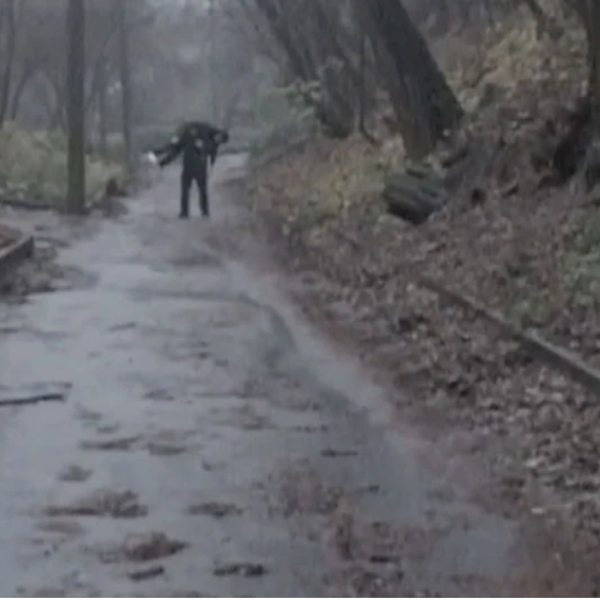 Yaroslav Futymskyi feat. Waldemar Tatarczuk untitled, video performance, 2025 video-documentation Sophia Gera In this performance, artist Yaroslav Futymsky reflects on how someone else’s experience can be felt, transferred, carried, shared, and interpreted. At times, the answer to this question is far less simple than it appears at first glance. Sometimes this experience is heavier than any stone.
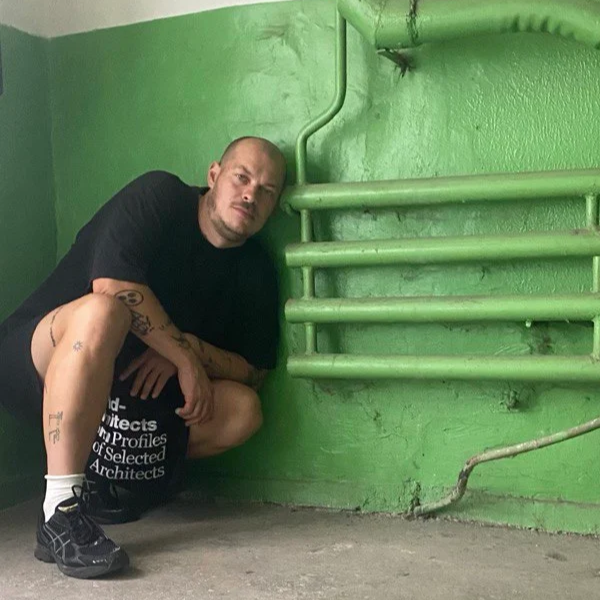 Yaroslav Futymskyi born in 1987 in Poninka, Ukraine, he is active in the fields of graphic art, installation, performance art, street art, photography and poetry. Futymskyi also curated exhibitions at Dzyga Gallery in Lviv, Labirynt Gallery in Lublin, Ukrainskyi Dim in Kyiv.
 -
Nikita Kadan
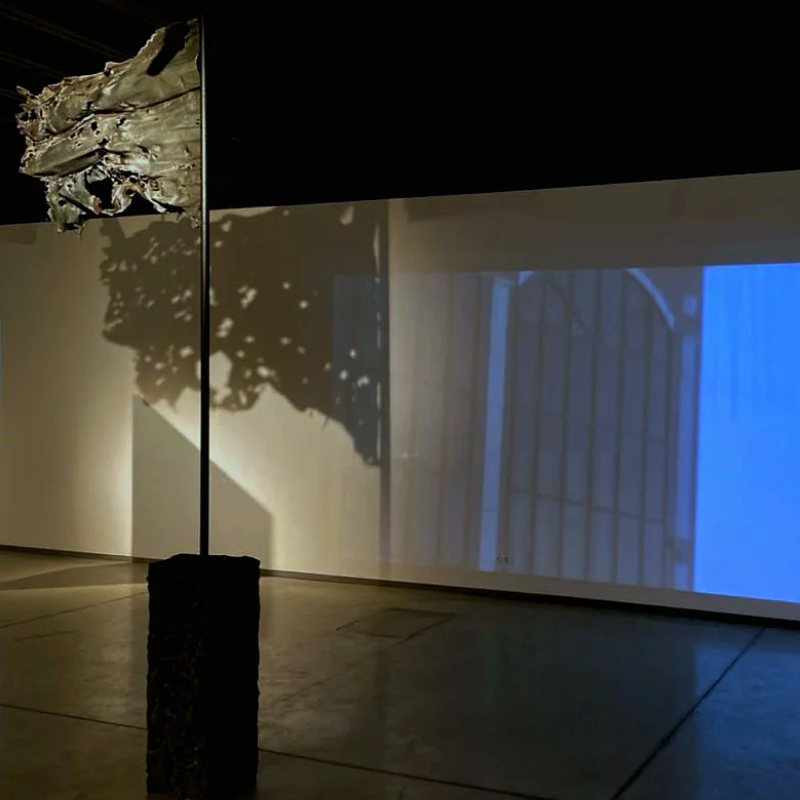 Granit, metal, 2025 Waldemar Tatarczuk meets Nikita Kadan on the shared ground of the flag as discourse. Over the years, Tatarczuk has systematically expanded his collection of short video works depicting national flags – cropped out of their wider context, filmed against the sky, fluttering in the wind, or at times falling limply. Pointing the camera at banners in different parts of the world was never the result of a pre-planned project; rather, this practice can be understood as a visual meditation on the relationship between space, the symbols of power that inhabit it, and identity – both individual and collectively constructed. The sculptures by Nikita Kadan that reference the figure of the flag also form an expanding corpus, developed since the onset of Russia’s aggression against Ukraine in 2014. Since then, the artist has been working with materials marked and transformed by war – molten by explosions, torn apart by blasts, pierced by bullets. This brutally shaped matter constitutes the substance of Kadan’s flags: works that are partly found objects, partly material evidence in the ongoing case of the war itself. The metal from which the flag was made was transported from the combined heat and power plant in Kryvyi Rih. The granite used for the pedestal of the flag presented in the exhibition comes from Korostyshiv—a town in the Zhytomyr region that in May became the target of a massive Russian aerial attack directed at civilians. Korostyshiv is known for its granite quarries and stone-working plants, which produce, among other things, tombstones. The metal for Flag consists of fragments from one of DTEK’s thermal power plants in the Dnipropetrovsk region. This plant, like energy infrastructure across Ukraine, has been shelled with missiles and drones for the fourth year in a row. TPP DTEK’s alone have suffered more than 210 strikes.
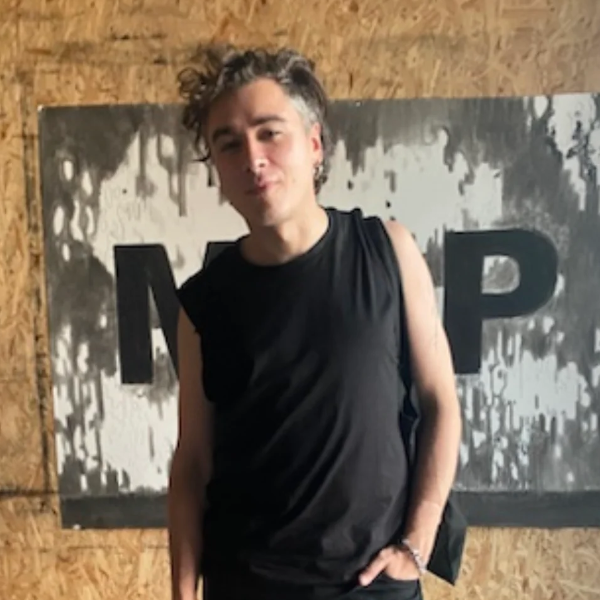 Nikita Kadan born 1982 in Kyiv, graduated from National Academy of Fine Art (Kyiv) in 2007. Nikita Kadan works with installation, sculpture, painting, graphics, often in interdisciplinary collaboration with historians, architects and human rights activists. He is a member of the artist group R.E.P. (Revolutionary Experimental Space) and founding member of Hudrada (Artistic Committee), a curatorial and activist collective. Kadan lives in Kyiv. His works were presented at in the Ukrainian Pavilion of the 56th Biennale Venice in 2015. Website of the artist: http://nikitakadan.com
 -
Zhanna Kadyrova
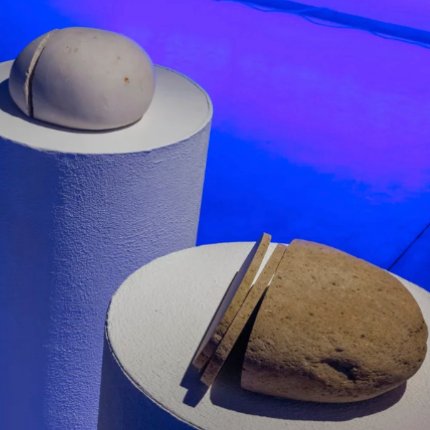 Zhanna Kadyrova, Waldemar Tatarczuk By Weight. Palyanytsia River stone, Construction foam block, Limestone, 2025 The Palianytsia project, initiated by Zhanna Kadyrova in 2022, is now known worldwide and, for international public, it has become one of the emblematic works of Ukrainian art in the era of full-scale Russian aggression. The exhibition presents three sculptures from this cycle. One is made of a river stone Kadyrova found in Transcarpathia. The other was created from debris carried downstream by the Dnipro River toward its mouth at the Black Sea, following the destruction of the Kakhovka Dam by Russian invaders. Another, third stone loaf is the work of Waldemar Tatarczuk, who treats Kadyrova’s practice here as a model to follow and a skill that must still be learned. For the material of his own stone loaf, he chose limestone – a soft and easily workable rock, but less durable and lacking the striking effect of the river stones Kadyrova typically uses. Choosing limestone thus represents the decision of a beginner in stone sculpture – Tatarczuk had not previously worked with this material. For the artist, however, this choice also carries symbolic meaning; Tatarczuk sees in it an allegory of the kinds of decisions being made in Poland and, more broadly, in Europe – a Europe reluctant to make an effort, seeking easy solutions, which does not necessarily mean the best ones..
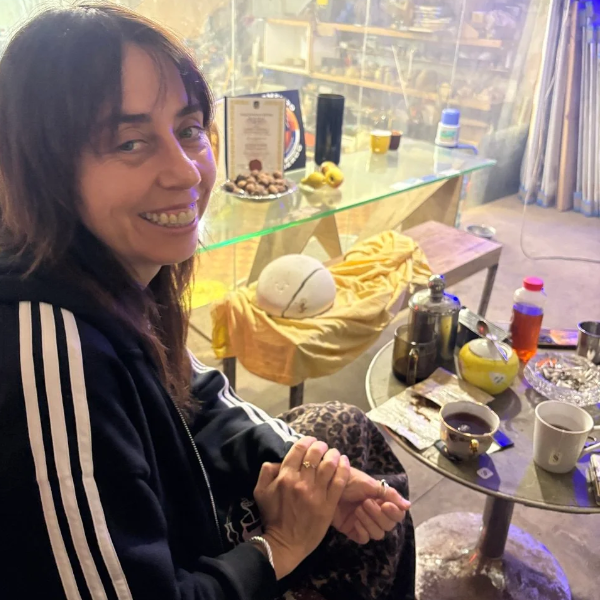 Zhanna Kadyrova born in 1981 in Brovary, Ukraine. She graduated from Shevchenko State Art School, department of sculpture.(was not accepted to the National Academy of Visual Arts and Architecture). Member of R.E.P. group. She creates site-specific projects: sculptures, mosaics, installations, objects and actions. In her artwork, she focuses on local contexts and place-people interactions. She was twice a participant of the Ukrainian pavilion at the 55th and 56th Venice Biennale and the main project participant of the 57th Venice Biennale. Works and lives in Kyiv.
 -
Vlodko Kaufman
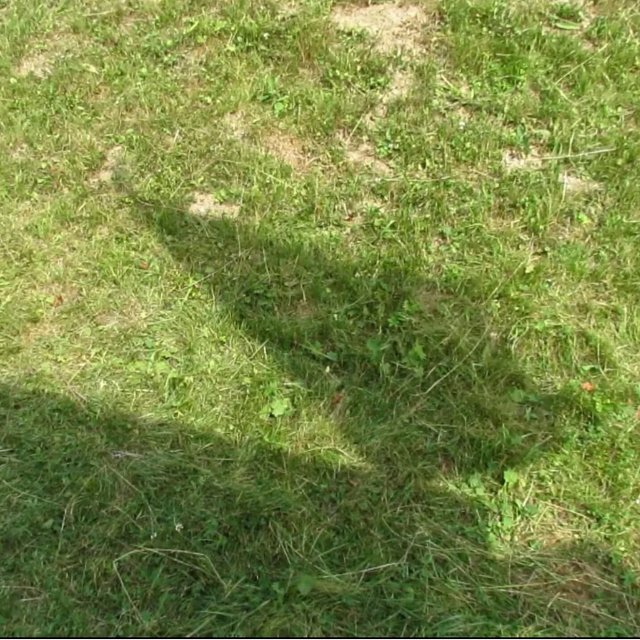 Vlodko Kaufman The shadow of a flag video, 2024-2025 In Vlodko Kaufman’s video, the shadow of a fluttering flag falls across the ground. It is hard not to think of it as the shadow of a state cast onto the landscape, transforming it intoterritory. It is also hard not to think that, while watching this work, we find ourselves in asituation similar to that of the people described by Plato in the cave allegory of his Republic. We do not see whose banner waves above the landscape. Is it our flag? A foreign one? In the frame, not only is the flag casting the shadow invisible, but so is the figure of the artistwatching that shadow – and yet his presence is palpable, betrayed by the hand-held camera. Waldemar Tatarczuk responds to Kaufman’s work with his own collection of images of flags. We see them in frames from short video clips he filmed in various parts of the world during his artistic travels. In the late-modern era, artists led the life of nomads – or at least they did so during the epoch of ‘the end of history’, which was supposed to begin after the Cold War. The postmodern artist appeared as a figure that did not fit within the borders of nation-states and cultures; freely crossing them, an individualist, a citizen of the world acting under the banner of art – and of his own unique identity. In the process of globalisation, borders were expected to become relics of the past, remnants of a divided era. Yet today, they not only persist; they become front lines. Flags, too, have not been consigned to the archive of history: raising a banner over someone else’s territoryremains the symbolic culmination of conquest, while defending a flag remains a symbol of resistance and endurance.
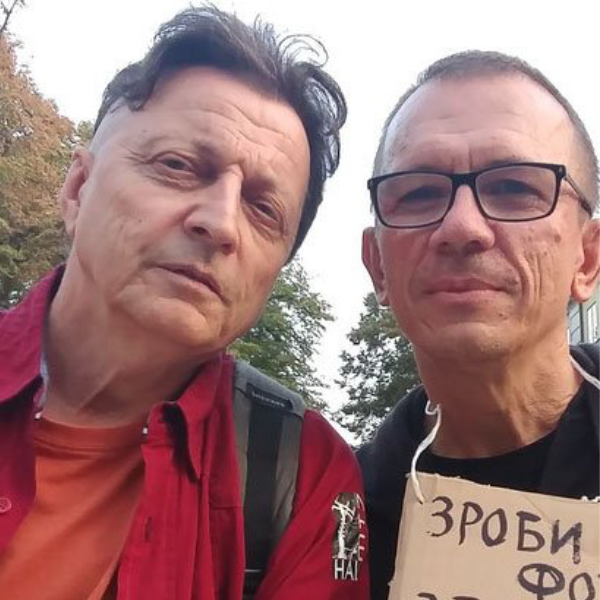 Vlodko Kaufman, born 1957, Karaganda (Kazakhstan). He graduated from the Ivan Trush Lviv College of Decorative and Applied Arts (1978). He studied architecture at the Lviv Polytechnic National University (1978–1980). He is a graphic artist, painter, performance artist, curator and co-founder of major art institutions in Lviv. From 1989 to 1993, he was a member of the Shliakh Art Society, in 1993, he co-founded the Dzyga Art Association. He is a co-founder of the Institute of Contemporary Art (2007). He curated the project ‘Actual Art Week’ in Lviv and the triennial Ukrainian Cross-Section.
 -
Pavlo Kovach
 Pavlo Kovach with Waldemar Tatarczuk Numbers (detail) acrylic on canvas, 2025 Pavlo Kovach serves in the Armed Forces of Ukraine. He works at headquarters, where his responsibilities include handling cases of soldiers reported missing at the front. Each such disappearance is assigned a specific registration number. Kovach, who did not abandon his artistic practice after being mobilised, has invoked these numbers in his artistic actions, inscribing them, among other places, on laurel leaves. The painting presented in the exhibition is the result of a collaboration in which Waldemar Tatarczuk assumed the role of executor of a painterly scenario developed by Pavlo Kovach. The work refers both to Kovach’s own artistic practice and to the work of the Polish artist Roman Opałka (1931–2011). In the mid-1960s, Opałka initiated a painting project entitled OPALKA 1965 / 1 –, referred to by the artist himself and by critics as the ‘Programme’. He continued this project for three and a half decades, until his death. As part of the ‘Programme’ Opałka painted consecutive numbers in white paint on canvases, beginning with the numeral “1.” The first painting was executed on a black background; in subsequent works, he continued the count on grey grounds that gradually grew lighter with each new canvas, moving steadily toward white. In accordance with Kovach’s concept, Tatarczuk works on a canvas of the same format – 196 × 135 cm – used by Opałka. He repeats the gesture of painting numbers in white, but transforms its meaning. In Opałka’s work, counting had an existential dimension: the paintings functioned as personal clocks measuring the artist’s own passing time. In the work created through the collaboration between Kovach and Tatarczuk, each number conceals a different person, their drama and unknown fate; within the abstract digits is inscribed a landscape of contemporary, war-torn Ukraine.
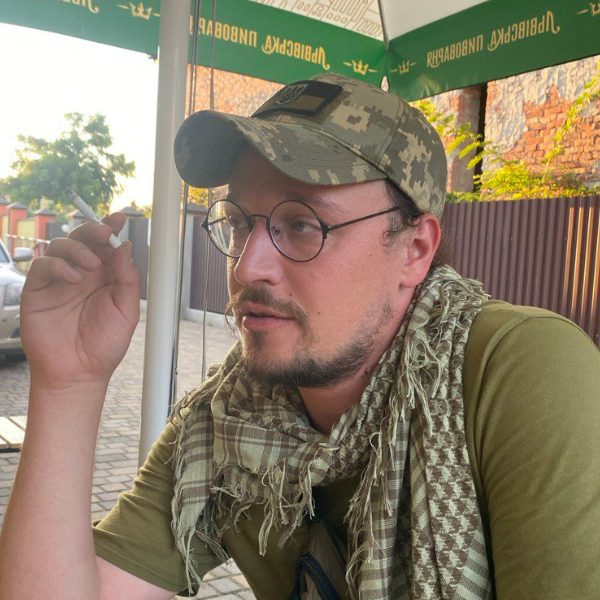 Pavlo Kovach born 1987, Uzhhorod. Graduated from the A. Erdeli Uzhhorod College of Art (2005) and the Lviv National Academy of Arts (2011). Winner of the MUHi competition (2012) and the IN-OUT Festival (Gdańsk, 2018). Co-founder of the Jefremova 26 Gallery and Detenpyla Gallery. Since 2012, he has been the founder and a member of Open Group. The collective received the Main Prize of the PinchukArtPrize (2015) and the Special Mention of the Allegro Prize (2020). Open Group curated the Ukrainian Pavilion at the Venice Biennale in 2019 and represented Poland at the Biennale in 2024 under the curatorial guidance of Marta Czyż..Pavlo is one of the curators of the Lviv Municipal Art Center. As a member of Open Group, he has participated in numerous exhibitions, including Wild Grass: Our Lives (8th Yokohama Triennale, Japan, 2024), Forever and a Day (Amsterdam, Netherlands, 2024), OurYears, Our Words, Our Losses, Our Searches, Our Us (Jam Factory Art Centre, Lviv, 2023).He lives and works in Lviv. Since 2023 he has served in the Armed Forces of Ukraine.
 -
Denys Pankratov
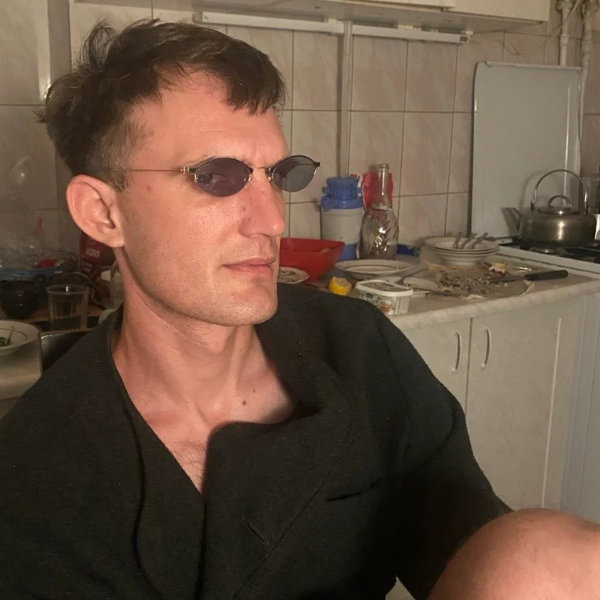
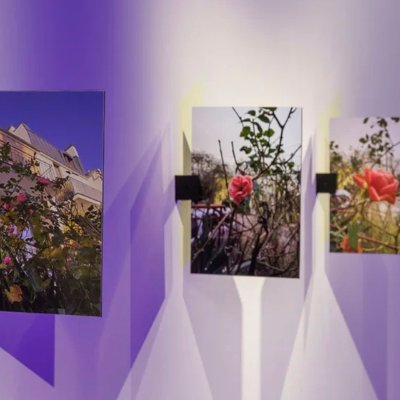 Denys Pankratov, Waldemar Tatarczuk Roses from Dobropillia. Roses from Lublin. 2 objects: glass, roses 8 photographs: pigment print on Dibond 2025 At the center of the collaborative work by Denys Pankratov and Waldemar Tatarczuk is the image of roses — a symbol often associated with Donbas, where Pankratov is currently serving. From there, he sent Tatarczuk photographs, most of which depicted roses: taken in Dobropillia and Bilozerske shortly before these towns became inaccessible due to intensified shelling. In return, Pankratov received photos of roses from Lublin, the city where Tatarczuk lives, a place that also falls into the category of inaccessible landscapes due to the duty and necessity of being elsewhere. Thus, in this work, roses become a very different symbol — one of connection, memory, distance, male friendship, and human vulnerability and fragility.
 Denys Pankratov born 1988, Khmelnytskyi (Ukraine). Graduated from the Course of Art by Lada Nakonechna and Kateryna Badianova (2012). Co-founder of the educational project Method Fond in Kyiv (2015), as well as its co-curator and participant in seminars and courses. In 2019, he moved to Lviv, where, together with artist VictoriaDorr he founded the semi-public exhibition space Mizhkimnatnyi Prostir. Denys is both a curator and artist, with a practice focused on researching archives, history, and the functioning of the museum as a public institution. His central interests include the history of women’s, workers’, and national movements, as well as the artistic avant-garde in Western Ukraine during the interwar period. He is also involved in activist initiatives. Since March 2022, he has taken part in the volunteer initiative Kitchen, which prepared meals for refugees in Lviv. He has participated in numerous exhibitions, including Nedo (thoughts, poetry, letters) (Tymutopiapress Gallery, Lviv, 2023) and This Is Just an Exhibition (Kyiv Biennial 2023, Labirynt Gallery, Lublin, 2023). He lives and works in Lviv. Since 2023, he has served in the Armed Forces of Ukraine.
 -
Anton Sayenko
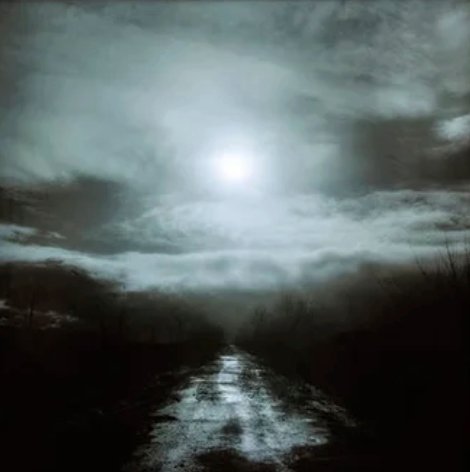 The exhibition presents several works by Anton Sayenko united by the image of the landscape. The artist gazes attentively into the horizon, seeking to convey its unsettling nature, and at the same time, its tenderness and closeness. Sayenko’s deserted landscapes are charged with emotional presence. While searching for an answer to how one can understand another person’s experience and share their anxiety, Waldemar Tatarczuk performs a critical gesture: he places his own image inside one of the lightboxes. Yet the question remains open: can a gaze directed at the same space truly allow us to share someone else’s fate, or is this only an illusion of closeness?
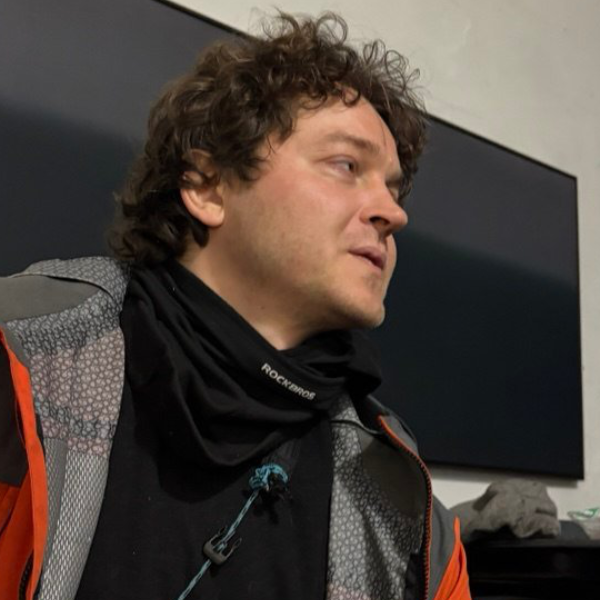 Anton Sayenko, born in 1989 in Sumy (Ukraine). Graduated from Bortniansky Sumy Higher College of Arts and Culture (2009) and the National Academy of Fine Arts and Architecture in Kyiv (2019). Also studied Contemporary Art at the Kyiv Academy of Media Arts (2015) and “Space of Attention” within the experimental self-education project Method Fund (2016). He is a special prize winner of the MUHi Young Ukrainian Artists competition (Kyiv, 2015), winner of the PinchukArtCentre Special Prize (2022), finalist of the PinchukArtCentre Prize (2025). Lives and works in Kyiv.
 -
Vasyl Tkachenko (Lyakh)
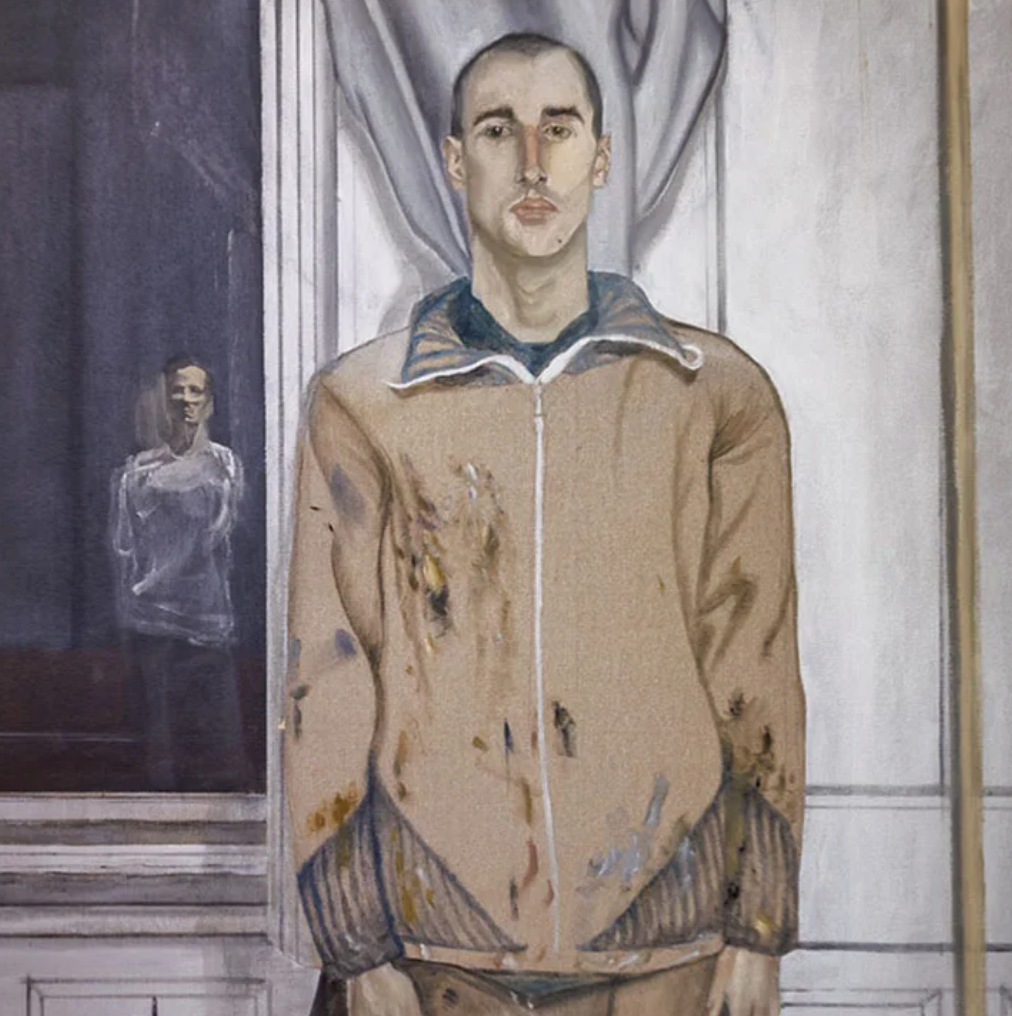 In recent years, particularly since he moved to Kyiv from his native Mariupol, Vasyl Tkachenko has focused primarily on figurative painting. His practice, however, also includes film and photography. Tatarczuk, too, made use of a camera. The starting point for the collaboration between the two artists was a photograph taken by Tatarczuk in Tkachenko’s studio. In the foreground, we see the painter himself; in the window behind him, Tatarczuk’s reflection is visible. The artists agreed that each of them would paint their own work based on this photograph—a double (self-)portrait. In this way, a dialogue of two gazes emerges: a record of an encounter taking place within a single image.
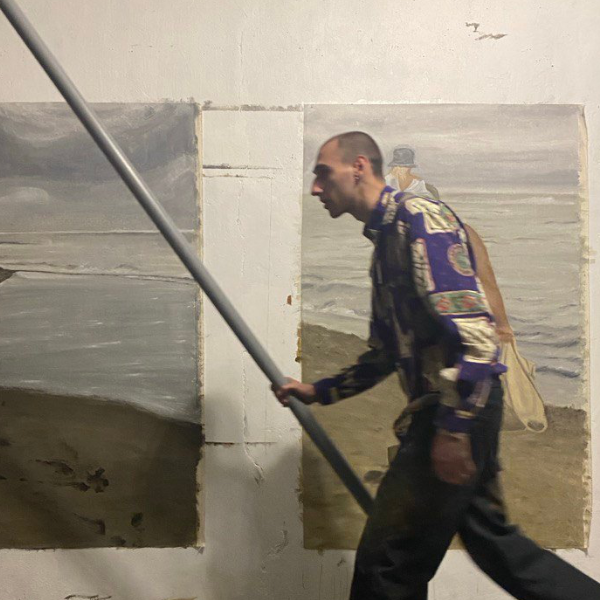 Vasyl Tkachenko (Lyakh), born 1995, Mariupol (Ukraine). Since 2019, he has been a member of the Freefilmers film movement. Vasyl’s paintings have been presented in numerous exhibitions, including”How Are You?” UMCA, at the ‘Ukrainian House’ (Kyiv, 2023), “Near/Far” at the Promotional Gallery (Warsaw, 2023), at the 5th Kyiv Biennial (2023), ‘Voices from Ukraine’ at the Labirynt Gallery (Lublin, 2025). The artist was nominated for the PinchukArtCentre Award 2025. He lives and works in Kyiv.
 -
Stanislav Turina
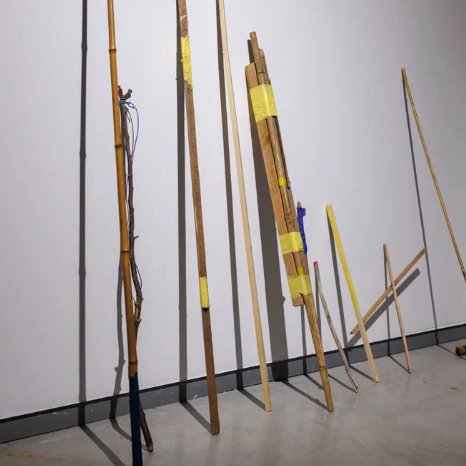 The installation Sticks, Rods, Poles was first presented as an artwork in 2024 within Turina’s solo exhibition A Few Kilograms of Exhibitions, with a changing display. These sticks, branches, a whip, pointers, a fishing rod, an umbrella, a broken mop, and other objects were collected in various ways over a longperiod. Each carries its own story and at the same time signifies nothing. Yet in the gallery space, they are not accidental: they speak of the non-randomness of life and reference the practices of Artem Badulaiev, Denys Pankratov, Daria Kuzmych, Yurii Kruchak, Yulia Kostereva, Katia Libkind, and Tiberii Silvashi, while casually glancing inward at the legacy of Collective Actions. An artist who works with life as a living material invites the viewer to reflecton what simple objects are, what meaning ‘unnecessary’ or ‘excess’ things sometimes carry, what ‘excess’ even is, and what makes old wooden slingshots the most precious among all valuable things.
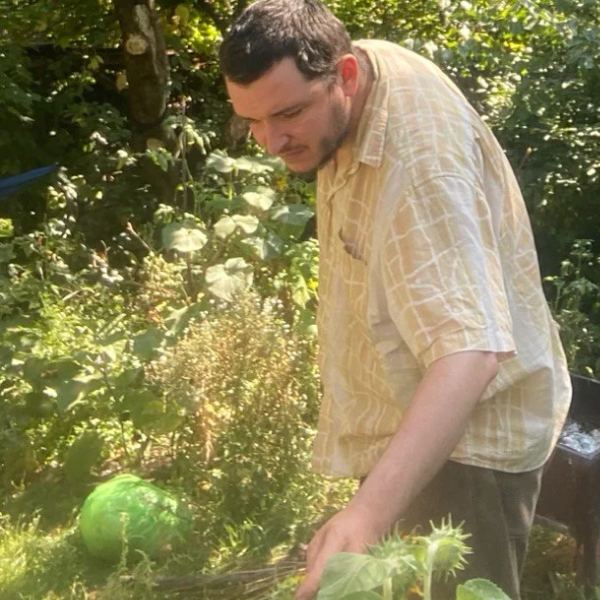 Stanislav Turina was born in 1988 in Makiivka, Donetsk region, and grew up in Mukachevo, Zakarpattia region. He received his artistic education at the Department of Glass at the Lviv National Academy of Arts (2005–2011). In his practice, he uses various media: graffiti, ceramics, drawing, installation, performance, and other media. In 2010, together with other artists, he co-founded the Black Circle Festival. He was also a co-founder of two self-organised galleries: Detenpyla and Yefremova26. In 2012, together with Yuriy Bilei, Anton Varga, Pavlo Kovach Jr., Oleh Perkovskyi, and Yevhen Samborskyi, he co-founded the Open Group (Відкрита група) collective. In 2018, together with artist Kateryna Libkind, he founded “Atelienormalno,” a studio for artists with Down syndrome and without it.
 -
Waldemar Tatarczuk
 —
— bio
bio